A pinched nerve means tissue around a nerve is pressing on it, which can cause pain, tingling, numbness or weakness. It can happen at the spine, wrist, elbow or ankle. New bladder or bowel changes need the ER. Symptoms lasting several days despite rest and self-care should be looked at by a professional.
Why the Pain Shows Up Somewhere Else
A nerve works like a long cable, so trouble at one point can be felt much farther along. Pressure on a nerve in the neck may show up as tingling in your fingers. Pressure low in the back may run down a leg.
The sore spot can be a poor guide to the cause. Finding where the nerve is caught, and what is pressing on it, comes before any plan.
Understanding a Pinched Nerve
A pinched nerve happens when bone, cartilage, muscle or tendon presses on a nerve. At the spine, doctors call it radiculopathy, and the symptoms usually stay on one side of the body. Farther out, the same thing can happen at the wrist, elbow or ankle.
How long the pressure lasts matters. A nerve caught for a short time often has no lasting harm once the pressure comes off. Pressure that continues can lead to chronic pain and nerve damage.
What makes one more likely
- Bone spurs, from arthritis or an old injury
- Rheumatoid arthritis, which can swell the tissue around nerves
- Diabetes or thyroid disease
- Extra body weight
- Pregnancy, through water and weight gain
- Hand, wrist or shoulder movements repeated all day
- Long periods of bed rest
Nearly half of middle-aged and older adults show disc wear and pinched nerves without any pain, the American Academy of Orthopaedic Surgeons says, and nobody knows why others get symptoms.
Pinched Nerve or Something Else?
Several problems can feel like a pinched nerve in the neck. Some shoulder conditions do, and so can inflammation at the elbow or heart disease. A nerve caught farther down, such as carpal tunnel at the wrist, can feel similar too.
Low in the back, a pinched nerve root has an older and better known name, sciatica down the leg. Your symptoms, a physical exam and tests help a provider find the true source.
Mayo Clinic gives sciatica as an older name for lumbar radiculopathy, and describes carpal tunnel syndrome as a pinched nerve in the wrist.
Signs a Nerve Is Under Pressure
- Pain that shoots down an arm or leg
- Burning or sharp pain along the path of the nerve
- Numbness or less feeling in one area
- Pins and needles
- A weak hand or foot, with dropped objects or trouble walking, which you should get checked
- A burning feeling in the foot or toes
- More pain when you turn your head or tilt it back
- Symptoms that get worse during sleep
What Can Squeeze a Nerve
A herniated disc
A disc between the bones of the spine can push against a nerve root.
Bone spurs and worn discs
Discs lose height with age and the vertebrae sit closer together. The bone spurs that form can narrow the openings where nerve roots leave the spine.
Repeated movement
Work, hobbies or sports that use the same motion over and over can compress a nerve.
An injury
A sudden injury can do it, and in younger people it often does so by way of a herniated disc.
Swollen tissue
Swelling from arthritis, or from fluid gain in pregnancy, leaves less room around a nerve.
How We Treat a Pinched Nerve in Towson
Treatment depends on where the nerve is caught and what is pressing on it. After our comprehensive evaluation, one of these services may be recommended, depending on your condition.
Chiropractic
Back pain that comes from a pinched nerve may be part of chiropractic care. The chiropractor works on a joint of the spine by hand or with a small tool.
Spinal Decompression
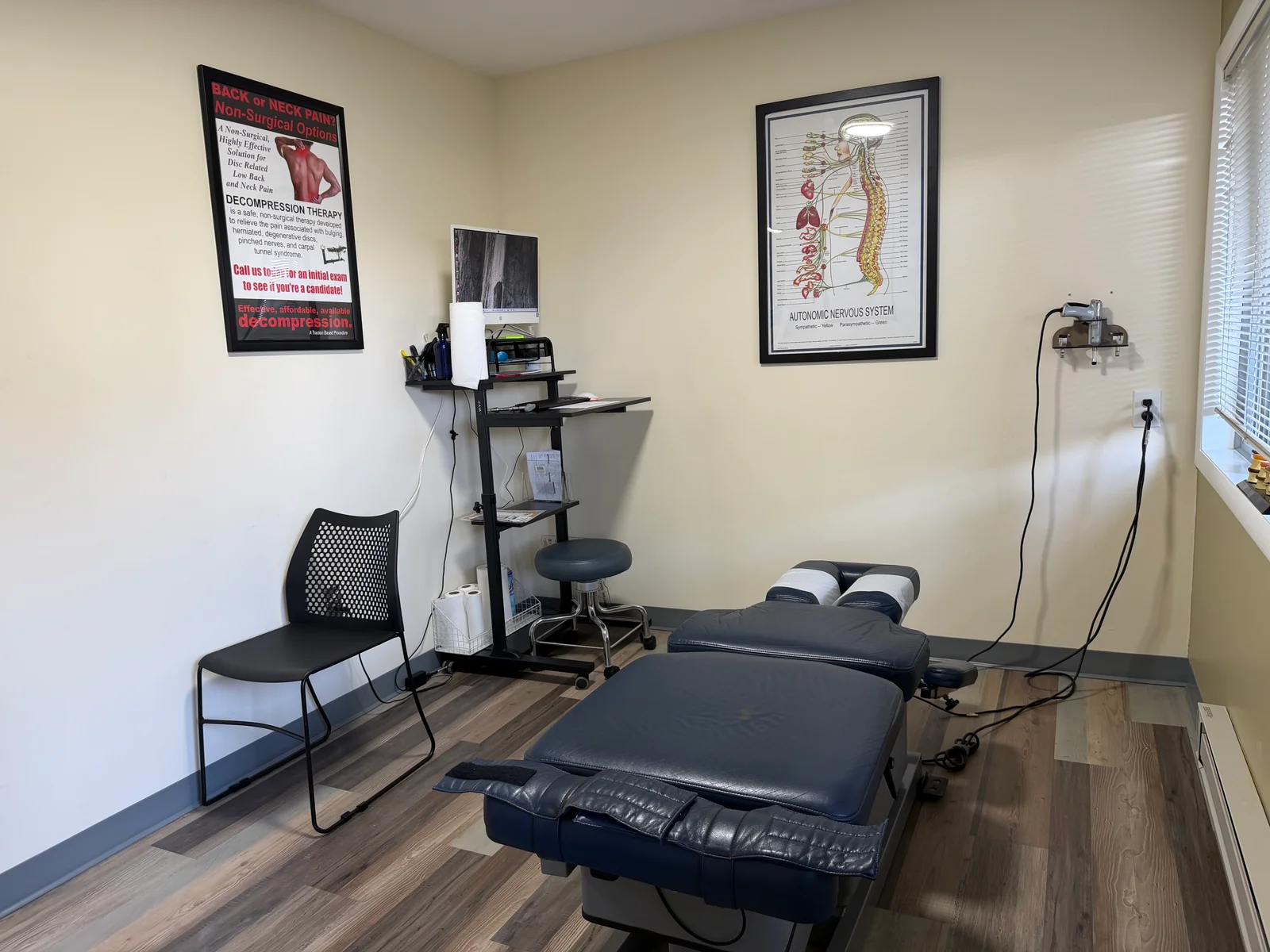
This stretches the spine, with the goal of easing pressure on nerves. It may be offered for back pain linked to a pinched nerve.
Your chiropractor carefully evaluates each condition first, which determines whether gentle chiropractic treatment fits you. Numbness, tingling or weakness is carefully screened, including orthopedic and neurologic testing, to isolate the cause and how your symptoms present.
Pinched Nerve Options Compared
This is not a full list of what is available. Your doctor or a nerve or spine specialist can explain the rest.
| Option | What it involves | Who provides it |
|---|---|---|
| Rest and self-care | Mayo Clinic says rest and non-prescription pain relievers may clear up the symptoms. | You, with advice from your doctor |
| Soft neck collar | A padded ring that rests the neck muscles for a short time. Long-term wear can weaken them. | Your doctor, if advised |
| Medicine | Anti-inflammatory drugs, or a short course of steroid pills. | Your doctor or pharmacist |
| Exercise program | Exercises that strengthen the muscles around the nerve and improve range of motion. | A provider your doctor recommends |
| Chiropractic adjustments | Controlled force on a joint in the spine. | A chiropractor at our Towson clinic, when recommended |
| Spinal decompression | A stretch of the spine. | This clinic, if recommended |
| Surgery | The American Academy of Orthopaedic Surgeons says a doctor may recommend it when nonsurgical care has not relieved symptoms after a period of time. | A spine or nerve surgeon |
When a Pinched Nerve Needs the ER
Go to the emergency room now for trouble controlling your bladder or bowels, or numbness around the rectum, in the inner thighs or down the backs of the legs. Go as well if pain, numbness or weakness keeps getting worse and makes everyday activities hard.
Those signs can mean pressure on the whole bundle of nerves at the bottom of the spine. Without quick treatment, weakness can last and paralysis is possible.
Call 911 for
- Sudden numbness or weakness in the face, arm or leg, especially on one side, which can be a stroke
- Sudden trouble speaking or seeing
- Chest discomfort, shortness of breath with or without chest discomfort, or a cold sweat with arm, shoulder, neck or jaw pain, which can be a heart attack
See a health professional for
- Symptoms that last several days and do not respond to self-care
- Neck or back pain that spreads into an arm or leg
- Numbness, tingling or weakness that is not sudden
The CDC counts pain in the jaw, neck, back, arms or shoulders among major heart attack symptoms, and says to call 911 immediately.
Pinched Nerve Care at This Clinic
Intake may go through your health in detail before any care starts. If what you have is outside what this team treats, you can be pointed to someone who does.
Close to I-695
Joppa Road runs parallel to I-695 through Towson, Parkville and Carney. Exit 28 at Providence Rd is about 0.8 miles north of the clinic. The Baltimore County Circuit Courthouses are about 1.5 miles west.
Schedule a Pinched Nerve Evaluation
Write down where the symptoms start, where they travel and what brings them on. Note anything you do over and over at work or for fun. For questions about insurance or what a visit costs, call the clinic.