With a herniated disc, the jelly-like core of a spinal disc squeezes out through a split in the disc’s firm outer wall. Most happen in the lower back, and the pain often lands somewhere else, such as a buttock, a leg or an arm. At Ideal Wellness on Cold Spring Lane in Roland Park, our team may recommend spinal decompression for herniated discs, chiropractic adjustments or guided exercise, depending on your condition and what our evaluation finds.
What Happens Inside the Disc
Each disc is a soft, round cushion between two bones of the spine. It has a tough outer ring and a soft, jelly-like center. The breakdown usually happens in three steps.
- The disc dries out. Discs start out full of water. Over the years they lose it and stiffen.
- The outer ring gives way. Once stiff, a disc can split with a minor movement, such as twisting or bending.
- The center pushes out. Some of the soft core escapes through the split and may press on a nerve root close by.
Pressure is only part of it. A herniated disc guide from the American Academy of Orthopaedic Surgeons explains that disc material also gives off chemical irritants that inflame the nerve. Between the two, a person may feel pain, numbness or weakness down one leg or both, a pattern called sciatica.
Herniated, Bulging or Slipped?
People often use these words as if they were the same. In a bulging disc, the outer layer pushes outward, typically along 25 to 50 percent of its edge. In a herniated disc, that outer layer cracks and softer material pokes through. Herniation is the likelier of the two to cause pain, because the material travels farther and can inflame a nerve root.
You may also hear a herniated disc called a slipped or ruptured disc. Neither name is accurate: the disc as a whole never slides out of place or bursts. The problem is limited to a small spot around the crack, and some herniated discs never cause symptoms.
Common Causes of a Herniated Disc
Most people cannot point to one moment when it happened.
Age-Related Disc Wear
Dry, stiff discs tear more easily than well-hydrated, flexible ones.
Lifting With Your Back
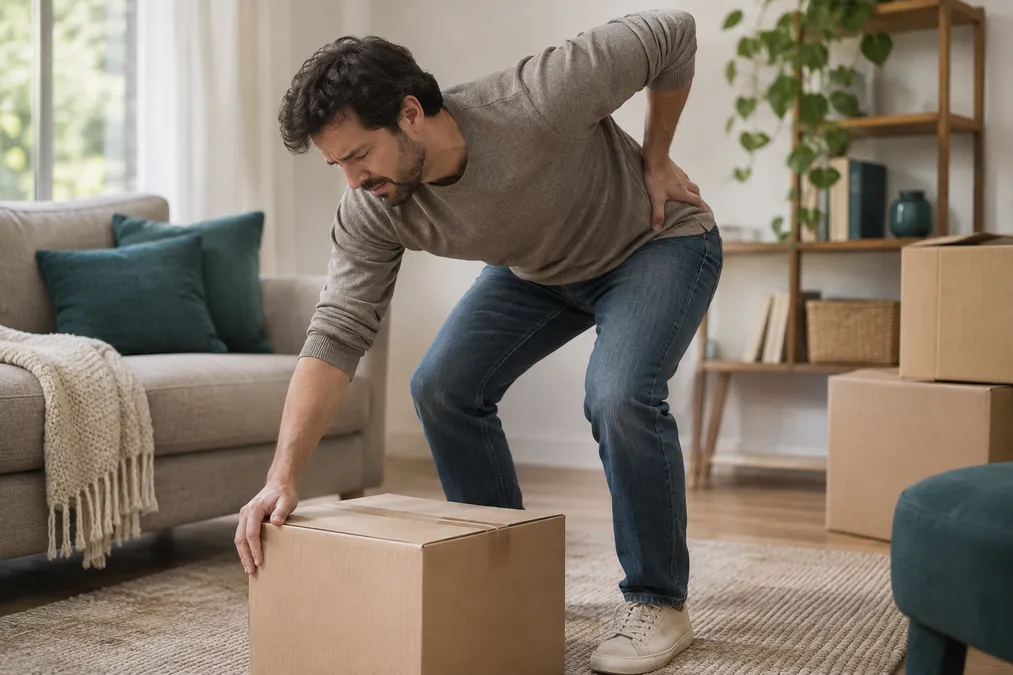
Using your back muscles instead of your legs to lift something heavy can herniate a disc, and adding a twist makes it more likely.
A Hard Fall or Direct Blow
This can cause a herniated disc too, though it happens less often.
Your odds go up with a family history of disc trouble, smoking, carrying extra weight, little regular exercise, long hours behind the wheel and work that means constant lifting or twisting. Men aged 20 to 50 have herniated discs more often than any other group.
When a Disc Becomes an Emergency
Those signs can mean the disc is pressing on the cauda equina, a bundle of nerves just beneath the end of the spinal cord. Fast treatment matters: without it, weakness may become permanent, or paralysis may follow. Have a health professional check you soon for new numbness, tingling or weakness, or for pain that travels into an arm or a leg.
Disc Care at Our Cold Spring Lane Clinic
Your first visit begins by going over your health history and your physical condition. If numbness, tingling or weakness is part of the picture, orthopedic and neurologic tests help trace where it comes from and how it behaves. Our team decides whether gentle chiropractic treatment suits you only after a careful evaluation of your condition.
Chiropractic Adjustments
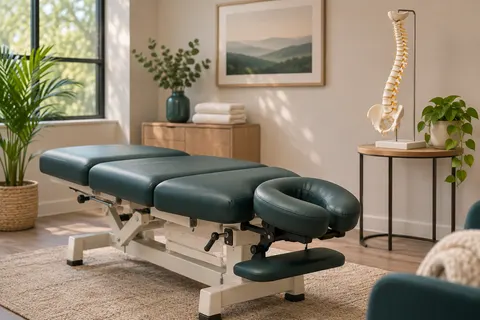
Adjustments may come next, aimed at taking pressure off nerves. With a bulging disc especially, spinal adjustments may be paired with an exercise plan.
Spinal Decompression on Our Table
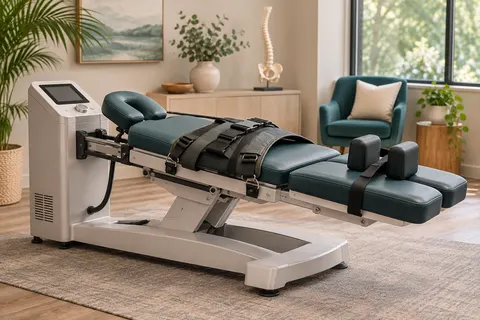
A spinal decompression table is part of our Roland Park clinic. By stretching the spine, decompression aims to open up space between the vertebrae, and it is offered for several reasons, herniated and bulging discs among them.
Back on Trac Traction
Back on Trac is also at our Cold Spring Lane clinic. It may be added as part of traction therapy for a herniated disc.
Guided Rehab Exercise
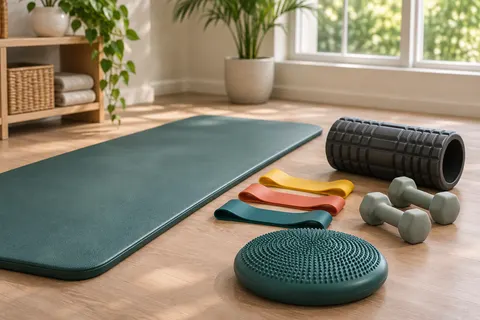
Exercises that strengthen the back and stomach muscles are part of nonsurgical disc care. At our clinic, chiropractic assistants lead chiropractic rehab exercise, and you are welcome to ask if that kind of plan makes sense for your disc.
If your own doctor is treating you as well, chiropractic care can be combined with that treatment. Our Towson clinic offers the same disc care; see herniated disc care in Towson.
Finding Us
Our clinic is at 220 W Cold Spring Ln, Baltimore, MD 21210, on the west side of Charles Street, and it has its own lot for parking. It is minutes from Loyola University Maryland and Notre Dame of Maryland University, and a short drive from the Cold Spring Lane exit of I-83.
You can book disc care on any weekday the clinic is open, Tuesday evenings until 7 PM included. Call (443) 396-3876 about cost or coverage, or choose a time on our booking page.
Common symptoms
- Low back pain
- Sharp, shooting pain from the buttock down one leg
- Shoulder and arm pain from a disc in the neck
- Pain that flares with a cough, sneeze or laugh
- Numbness or tingling in a leg or foot
- Weakness in a leg or foot
- Symptoms on one side of the body