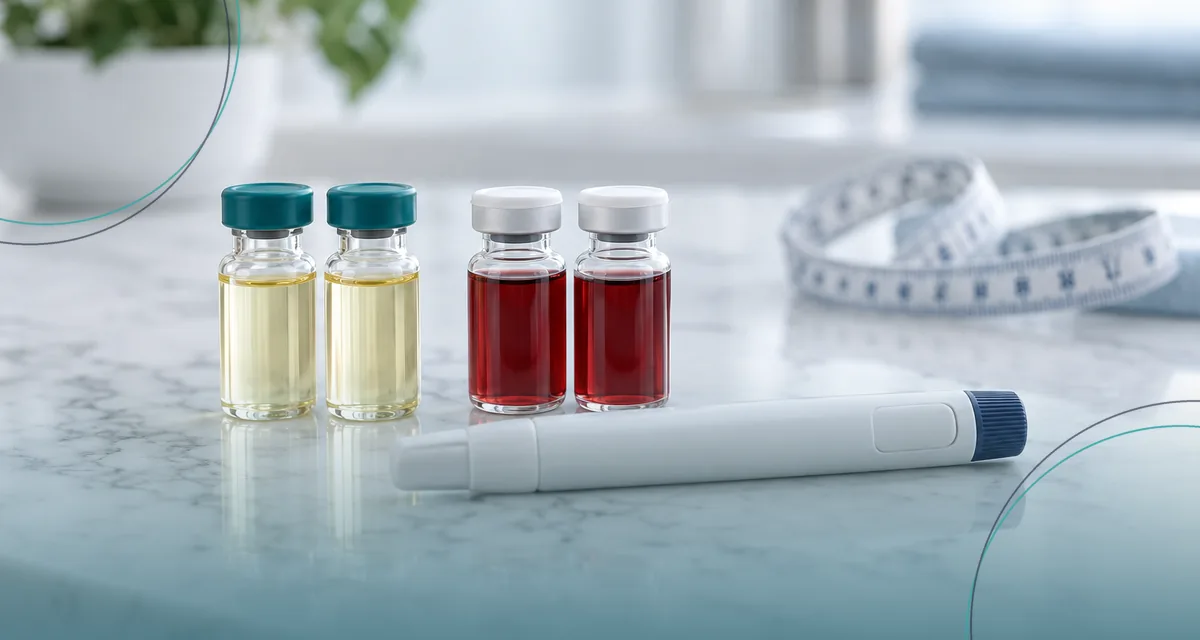
TL;DR: In the Lipo-B vs. Lipo-C question, both are lipotropic nutrient injections built on methionine, inositol, and choline; Lipo-B adds vitamin B12, and Lipo-C blends often add L-carnitine. GLP-1 medications are prescription drugs that act on appetite hormones. The right fit depends on your health history and goals.
When people compare Lipo-B vs. Lipo-C, they are often also wondering where GLP-1 medications fit in. All three involve a needle, and all three show up in weight loss conversations. They work in very different ways, though.
This guide explains each option at the level of how it works and who it may suit. It is meant to help you ask better questions, not to pick a shot for you.
What Is the Difference Between Lipo-B and Lipo-C?
Lipo-B and Lipo-C share the same lipotropic base and differ mainly in what is added to it. Most blends start with methionine, inositol, and choline, nutrients involved in how the liver handles fat. Lipo-B usually adds vitamin B12. Lipo-C blends vary by pharmacy and often add L-carnitine or other B vitamins.
There is no standard recipe for either name. Two clinics can use the same label for different formulas, so the only reliable answer comes from the ingredient list on your vial.
At Ideal Wellness, our Lipo-C formula pairs methionine, inositol, and choline with B vitamins. Our page on lipotropic Lipo-C shots covers how we use them within a weight plan.
Here is the short version of how the added ingredients are meant to work:
- Vitamin B12 (Lipo-B). Helps keep blood and nerve cells healthy and supports normal energy metabolism.
- L-carnitine (many Lipo-C blends). Carries fatty acids into the mitochondria, where cells burn them for energy.
- Methionine, inositol, and choline (both). Support how the liver processes and moves fat.
How Do GLP-1 Medications Work Differently?
GLP-1 medications act on hormones and the brain, not on nutrient levels. Drugs such as semaglutide mimic a hormone called GLP-1 that targets areas of the brain that regulate appetite and food intake. Tirzepatide mimics both GLP-1 and a second hormone, GIP.
That is the core mechanism difference. Lipotropic shots supply nutrients, while GLP-1 medications change the signals that drive hunger.
Because GLP-1 drugs are true medications, they also come with real side effects. MedlinePlus lists nausea, vomiting, diarrhea, stomach pain, and constipation among the common ones for semaglutide, along with an important warning about thyroid tumors seen in rats. A prescription and follow-up visits are part of using them safely.
Lipotropic shots supply nutrients, while GLP-1 medications change the signals that drive hunger.
Where Each One Fits
Here is how each one fits into a weight plan:
- GLP-1 medications. A prescription option for adults who meet medical criteria, used alongside a lifestyle program.
- Vitamin B12. The ingredient Lipo-B adds, and it matters when levels are low.
- Lipotropic injection blends. An optional add-on to nutrition and activity changes. Most are compounded, so ask what is in yours and where it is made.
Lipotropic shots play a supportive role within a wider plan for nutrition, activity, and sleep.
Side by Side: Mechanism and Who Each May Suit
Putting the three next to each other makes the differences easier to see. Read each line as a starting point for a conversation, not a recommendation:
- Lipo-B (lipotropic base plus B12). Mechanism: supplies B12 and fat-processing nutrients. May suit: people with low or borderline B12 who want nutrient support during a structured plan.
- Lipo-C (lipotropic base plus carnitine or B vitamins, by formula). Mechanism: supplies nutrients involved in moving and burning fat. May suit: people who want a non-prescription add-on to nutrition and activity changes.
- GLP-1 medications. Mechanism: mimic appetite hormones that act on the brain. May suit: adults who meet medical criteria for weight management medication.
Who Is Each Option For?
GLP-1 medications are for people who meet specific medical criteria, while lipotropic shots are optional add-ons. The NIH describes weight management medications as an option for adults with a BMI of 30 or higher, or 27 or higher with a weight-related condition such as high blood pressure or type 2 diabetes.
If your weight is affecting your blood pressure, blood sugar, joints, or sleep, a lipotropic shot is not the right starting point. A full medical plan, and in many cases obesity treatment and long-term support, comes first.
Lipotropic shots may be a reasonable add-on for people who:
- Do not qualify for, or do not want, a prescription medication
- Want nutrient support as part of a supervised plan
- Are already working on nutrition, activity, and sleep
If tiredness is the main reason Lipo-B caught your eye, a talk about your history is a simple first step, and testing is available if a deeper look would help. Low B12 has several possible causes, and the right fix depends on which one applies to you.
The best way to compare your options is with a clinician who knows your history, medicines, and goals. You can review the weight loss treatments we offer to see how prescription and non-prescription options fit together.
Can They Be Used Together?
Some plans combine them. Both can cause stomach upset, so side effects may overlap. If you already take a GLP-1 medication, any add-on should be planned by the clinician who prescribes it.
A combined plan should still have a clear goal, a way to measure progress, and a date to reassess. If an add-on is not helping by then, it is fair to stop it.
Questions worth asking include what the add-on is expected to do, how you will know whether it is working, and whether it changes the cost or visit schedule of your plan. Clear answers make it easier to judge the add-on on results rather than hope.
Choosing Between Lipo-B, Lipo-C, and GLP-1 With Your Clinician
The Lipo-B vs. Lipo-C choice comes down to formula and your plan, while the GLP-1 question comes down to medical criteria and your goals. Lipotropic shots are nutrient support. GLP-1 medications are prescription drugs with real side effects. Neither replaces the daily habits that make weight loss last.
Our medical team reviews your history before recommending any injection, and recent labs are welcome. If you are weighing a lipotropic shot, learn what to expect from a Lipo-C consultation and schedule a visit to talk it through.
Frequently Asked Questions
What is the difference between Lipo-B and Lipo-C?
Both are lipotropic injections built on a base of methionine, inositol, and choline. Lipo-B adds vitamin B12, while Lipo-C blends vary by pharmacy and often add L-carnitine or other B vitamins. The better choice depends on your history and goals.
How do lipotropic injections fit into weight loss?
Lipotropic shots are best seen as a possible support for a nutrition and activity plan, not a weight loss treatment on their own.
Are lipotropic injections the same as semaglutide?
No. Semaglutide is a prescription GLP-1 medication that mimics a gut hormone to reduce appetite, and specific brands are prescribed for weight management. Lipotropic injections are nutrient blends, usually compounded, that do not act on appetite hormones in the same way.
How do I know whether a GLP-1 medication or a lipotropic shot fits me?
Start with the medical criteria. GLP-1 medications for weight management are generally prescribed for adults with a BMI of 30 or higher, or 27 or higher with a weight-related condition such as high blood pressure or type 2 diabetes, after a review of your history, medicines, and any family history of certain thyroid tumors. Lipotropic shots are an optional add-on, not a substitute for a medication you qualify for.
Can you take Lipo-C and a GLP-1 medication at the same time?
Some clinics offer both within one plan. Both can cause stomach upset, so side effects may overlap. Any combination should be planned and monitored by the clinician who prescribes your medication.
Ready to take the next step?
Schedule an appointment with our Baltimore team, or explore the service behind this guide.